Playing Mini Golf Outside Feels Different — Here's Why That Actually Matters

Picture this: it's a warm Saturday afternoon, there's a light breeze, and you're standing at hole three with a windmill slowly rotating in front of you. Birds are somewhere nearby. Your kid is already three putts deep and complaining the sun is in their eyes. That's outdoor mini golf. And it's a completely different animal from its indoor cousin.
What Outdoor Mini Golf Actually Is
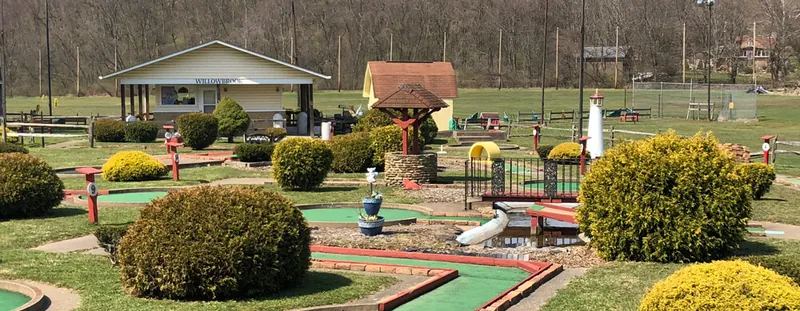
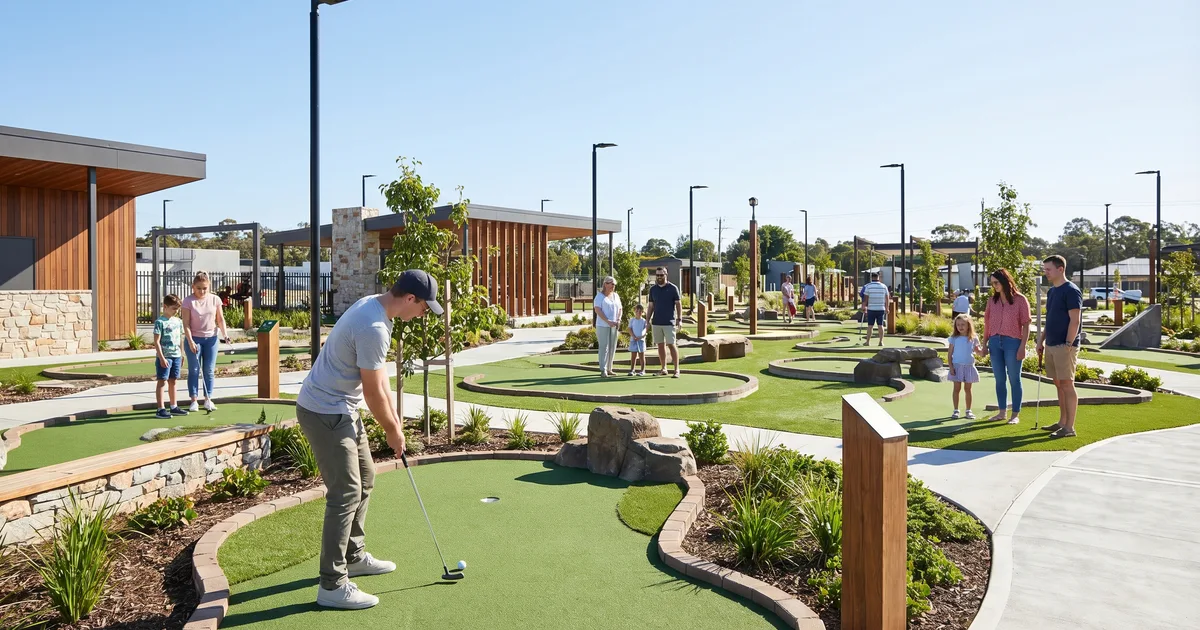
Outdoor mini golf courses are purpose-built putting experiences set entirely in the open air. They're not driving ranges. They're not full-size golf courses scaled down. Most run 18 holes, though some go up to 36, and they're designed to mix physical obstacles with terrain that changes based on the weather, the light, and the season.
These places usually sit on permanent plots of land, sometimes attached to family entertainment centers, sometimes operating as standalone attractions. You'll find them in beach towns, suburban strips, state park areas, and city parks. A good facility puts serious thought into theming, drainage, and materials that hold up to rain and sun year after year.
One thing that catches people off guard: outdoor mini golf courses vary wildly in quality. Some look genuinely beautiful, with real landscaping, water features, and clever elevation changes. Others are a bit tired, with faded paint and wobbly obstacles that have seen better decades. Reading recent reviews before you go is genuinely worth the two minutes it takes.
Mini Golf Pal has 22+ verified outdoor mini golf listings, and the average rating across those sits at 4.5 stars. That's a solid baseline, but still worth checking individual scores before you make plans.
What to Expect When You Show Up
Most outdoor mini golf courses operate on a walk-in basis. No reservations, no tee times. You pay at the front, grab a putter and a ball, and go.
Pricing is usually per person, per round. Expect somewhere around $8 to $15 for adults at a well-maintained course, with kids often running a dollar or two cheaper. Some places offer twilight rates after a certain hour, which honestly makes evening rounds a better deal and way more fun when the course has lighting strung around the holes.
Okay, small tangential observation: a lot of outdoor mini golf spots have a snack shack or concession stand nearby, and somehow the nachos at these places are always either incredible or deeply questionable. There's no middle ground. Plan accordingly.
Wait, that's not quite right to leave it there. The food situation actually matters for longer visits. Families with younger kids often spend 60 to 90 minutes on a full 18-hole round, so having somewhere to grab a drink or a snack on-site is more practical than it sounds. Check the listing details before you go if that's a priority.
Bring cash if you can. Not every outdoor facility has updated their payment systems, and some smaller operations are still cash-only. You do not want to drive 25 minutes and find out at the counter.
How It Differs from Indoor Mini Golf
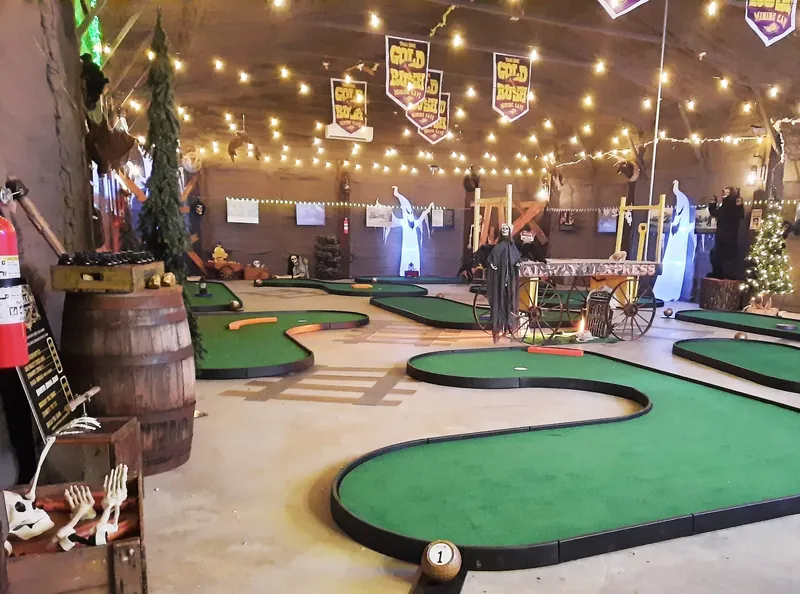
Indoor mini golf has gone in a very specific direction lately: black lights, neon paint, fog machines, pirate themes. It's entertaining, especially for evening outings or rainy days. But it trades atmosphere for spectacle in a way that outdoor courses simply don't.
Outdoor mini golf courses use the environment itself as part of the design. Slopes are real. Wind affects your shot. A water hazard is actual water. That adds a layer of unpredictability that indoor courses can't fake with carpet and obstacles alone.
Skill plays a bigger role outside, too. Real terrain means you're actually reading the ground, adjusting for a subtle incline, figuring out how hard to hit on a downhill putt. Indoor courses tend to reward muscle memory more than course management. For people who actually enjoy golf in any form, outdoor mini golf feels closer to the real thing.
And then there's just the experience of being outside. Sunlight. Fresh air. Space to spread out. These places work better for large groups partly because there's room to move around between holes without feeling cramped.
Indoor mini golf wins on weather flexibility. Full stop. But if conditions are good, outdoor beats it on almost every other dimension.
Tips for Getting the Most Out of a Visit
Go in the morning or late afternoon. Midday sun on a shadeless course in July is rough. Most outdoor mini golf facilities don't have a lot of shade built in, and you will notice by hole 12 if you went at noon in August.
Check the course's surface material before you go. Some use artificial turf, which plays fast and consistent. Others use older materials like carpet or painted concrete, which can be uneven and slow things down. It's a small detail that makes a real difference in how the round plays.
Wear comfortable shoes. This sounds obvious, but people show up in flip flops on courses that have hills, gravel paths, and uneven transitions between holes. Sneakers work better than sandals, full stop.
If you're visiting with a mixed group of ages or skill levels, outdoor mini golf handles that better than almost any other group activity. Younger kids can take extra putts without anyone keeping strict score. Adults who actually care about the game can play it straight. Both things can happen at the same time on the same round, which is genuinely rare for a group activity.
Browse the listings on Mini Golf Pal, check recent photos if they're available, and look for courses that mention upkeep or recent renovations. A course that's been maintained well plays better and looks better. It's worth spending a few extra minutes finding the right one before you go.