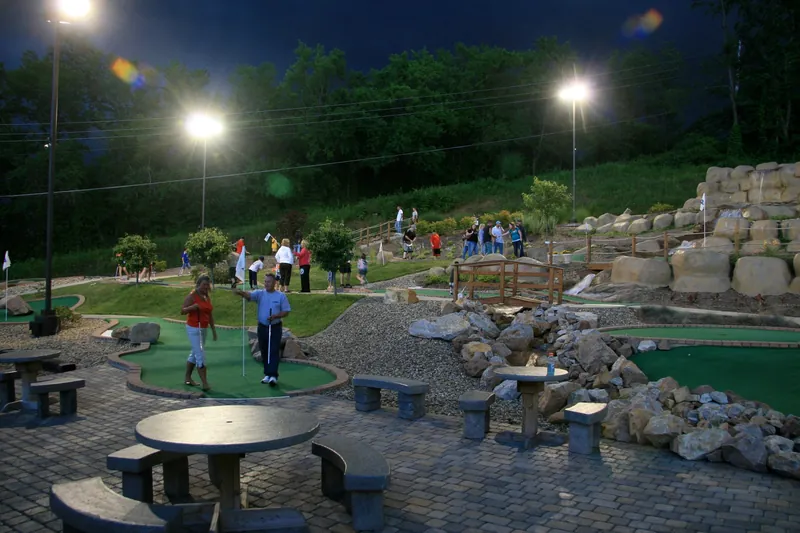
5 Reasons Handpicked Mini Golf Courses Beat a Random Google Search

Out of 22+ verified listings on Mini Golf Pal, the average rating sits at 4.5 stars. That's not a participation trophy number. That kind of consistency only shows up when someone has actually done the work of filtering out the duds before you ever see the list.

Finding a good mini golf course on your own is harder than it sounds. You end up scrolling through outdated reviews, clicking on courses that closed two years ago, or showing up somewhere that looked fun in photos but turned out to be a faded concrete slab with a windmill that stopped spinning in 2018. Curated listings exist to solve exactly that problem.
1. Someone Already Did the Legwork for You
Handpicked courses are not just sorted by proximity or star count. Each one has been selected because it brings something specific to the table, whether that's a standout theme, a genuinely creative layout, or course design that works for both a five-year-old and a competitive adult who takes their putter seriously.
That last part matters more than people realize. A lot of mini golf spots are designed for one audience and quietly miserable for everyone else. A course that's all cartoon characters and pastel colors might be perfect for a birthday party for a six-year-old but completely uninteresting for a date night or a family outing with older kids. Curated spots tend to have broader appeal baked in.
Actionable tip: Before you visit any listing, check whether the course description mentions theme details specifically. "Pirate-themed obstacles" tells you more than "fun for families." You want specifics, and the good listings have them.
2. Unique Themes Actually Change How Much Fun You Have
Here's something most people don't think about until they're standing at hole seven, bored. Mini golf without a theme is just putting on carpet. It's fine. It's not memorable.
A well-designed theme does a few things at once. It gives kids something to look at and talk about between shots. It gives adults a reason to care about the setting instead of just counting holes until the round is over. And it creates the kind of small, silly moments that make a Tuesday evening feel like an actual outing worth remembering.
Some of the best-rated courses in the directory lean hard into specific concepts, things like underwater kingdoms, dinosaur excavation sites, or elaborate storybook worlds where each hole connects to the next. That kind of design takes real effort. It also tends to show up in the reviews, which is part of why those courses earn their high ratings.
Actionable tip: If you're planning a group visit, look for courses where the theme has a narrative thread running through it. Those tend to spark more conversation and keep the whole group engaged, even when someone's having a rough round.
3. Verified Listings Mean You Won't Show Up to a Closed Gate
Honestly, this might be the most practical reason to use a curated directory. Nothing derails a weekend plan faster than driving across town and finding a padlock on the entrance.
Verified listings get checked. Hours, location, contact information, whether the place is still actually operating. It sounds like a low bar to clear, but you'd be surprised how many general review platforms still show listings for businesses that haven't existed in years. Mini golf courses in particular open and close with the seasons in some regions, and keeping that information current requires actual maintenance.
And yes, 22+ verified listings is a real number worth paying attention to. It means the directory is active, not just a set-it-and-forget-it page that someone built and abandoned.
4. Challenges That Work for All Skill Levels Are Rarer Than You Think
Most people assume mini golf is universally accessible. It mostly is. But course difficulty varies a lot more than the brochure photos suggest.
Some courses are genuinely tricky, with tight angles, elevation changes, and obstacles that require real shot planning. Others are so easy that anyone above the age of eight will hole out in one on most holes and be done in 25 minutes, slightly underwhelmed. Neither extreme is bad in itself, but it depends entirely on who you're bringing.
Curated courses tend to hit a middle ground on purpose. Designers who care about the full experience build in variety: a few easy holes to keep younger players happy, a few genuinely puzzling ones that make adults stop and think. That range is what keeps a round fun from hole one to hole eighteen instead of peaking early and dragging at the end.
Actionable tip: Read the difficulty notes in listings carefully before booking for a mixed-age group. A course described as "challenging for adults" without also mentioning family-friendly elements might frustrate younger players before the round is half over.
5. A Good List Saves You from Settling
Without a curated starting point, most people default to whatever is closest. That's understandable. It's also how you end up at a mediocre course when a genuinely great one was only a few miles further down the road.
Mini golf spots worth visiting are not always the ones with the biggest signs on the main road. Some of the best-rated courses in any area are tucked into side streets, attached to other attractions, or part of larger entertainment complexes where the mini golf itself is the hidden gem rather than the main advertised feature. You wouldn't know to look for them without a list someone built specifically to surface them.
A well-maintained directory does something a search engine can't: it applies judgment. Not just "people clicked on this" or "this business paid for placement," but an actual human decision that this course is worth your time. That's the whole point of curation. It narrows a wide, messy field down to the places that are genuinely worth the trip.
Browse the full list of curated mini golf spots on Mini Golf Pal and find a course worth visiting this weekend.